Showing posts with label Equipment Review. Show all posts

Tuesday, 12 November 2013

Himlung Himal 7126m - 2nd British ascent


Stunning evening light at camp 1


Approaching Camp 1


Camp 0.9 among the seracs


The route to Camp 2

Amongst the crevasses below Camp 2


Stunning views across to the Annapurna range

Atmospheric climbing on the way to Camp 2

The final long snow slope to Camp 2

Looking down to Camp 1 among the crevasses

The stunning ridge line to Camp 3

Approaching Camp 3 with the summit in the far centre

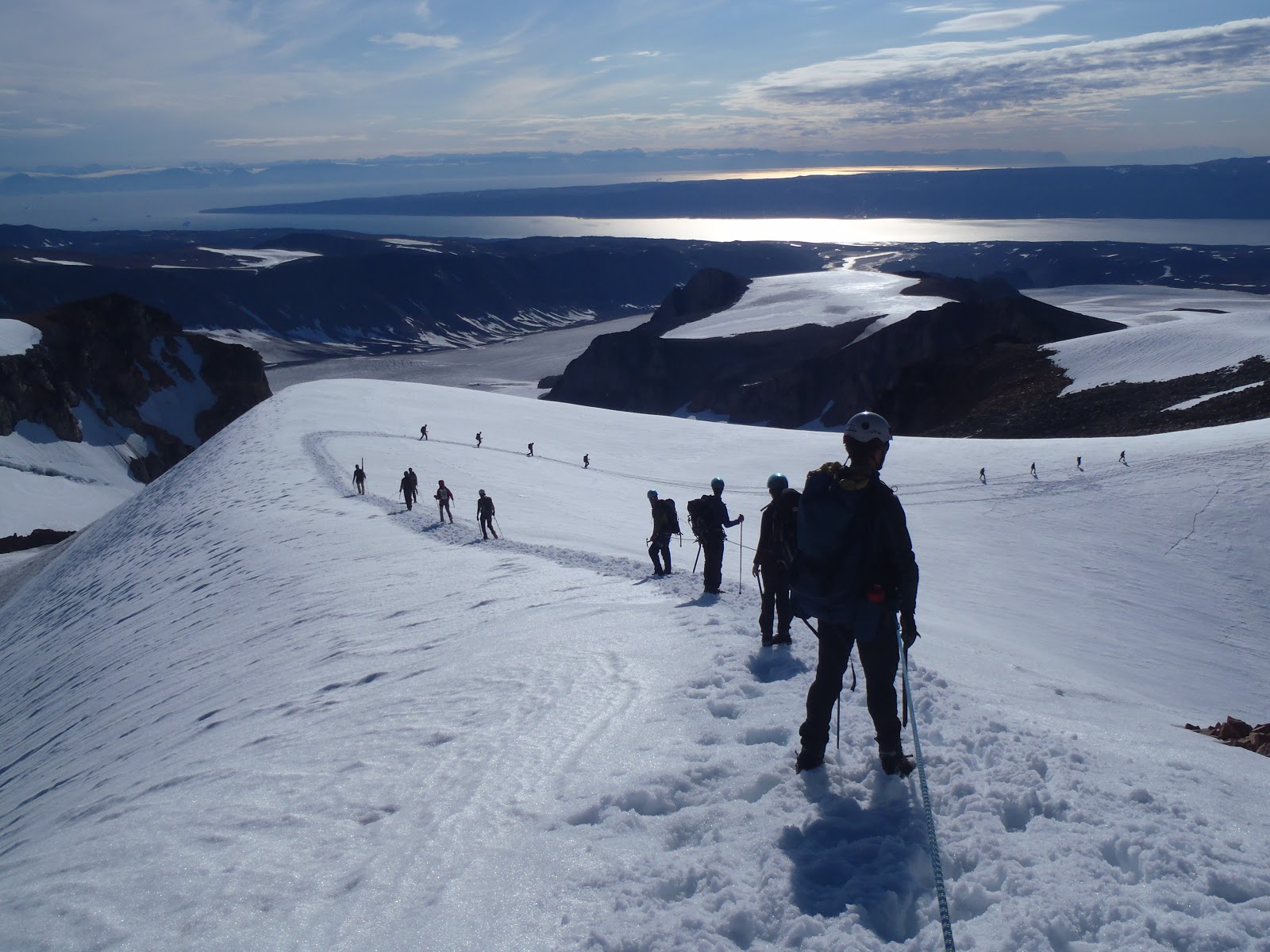
   Crossing the  subsidiary summit to access the final summit pyramid


Summit day!


Looking back down the summit pyramid to camp 3 beyond the furthest summit

Summit of Himlung Himal 7126m

The long descent...

Back to camp 3 after a long summit day

Sunday, 8 September 2013

The North Face Enduro Plus Hydration Pack Review

I've used the great looking Enduro Plus Hydration Pack from The North Face for my last two ultras. It only arrived two days before the Lakeland 100 where it did a great job through 38 hours of effort. I then took it to Chamonix for the 60 mile CCC where it again behaved flawlessly.

It's a very short and squat design that sits low on my back and does look a bit strange when fully laden. However it is incredibly comfortable and I've had no issues with chafage or the pack bouncing. My back bears permanent scars from racing with packs with a longer back length but in 165 miles of racing in extremes of heat and 'dampness' I've not had a single problem.

Finishing a soggy Lakeland 100 with the low sitting Enduro Plus under my waterproof
I like my comforts so had it stashed pretty full for both races but with a bit of work its 9.5 litres should accommodate a very lightweight mountain marathon set up. its just a wee bit small for working in the mountains (bothy bag, first aid kit, spare jacket etc) but I'm finding it ideal for most of my own running and cycling adventures 

For me the Boa anti slosh tightening system to secure and compress the water bladder worked as it should but solves a problem that doesn't really exist. Certainly the water bouncing and sloshing about is not something I've ever worried about in any other pack as expelling the air before sealing the reservoir also does a pretty good job. The wire and dial system adds weight and complexity and I had a few issues on the Lakeland 100 when with cold and wet hands kit was snagging on the exposed wires.

I used the mesh pocket on the back for a water bottle on the Lakeland 100 and for my windproof on the CCC and it worked very well being easy to locate with a bit of practice. I find the side pockets on some race packs, which are placed up towards your arm pits, rub against my arms when I'm running but are awkwardly placed when trying to grab a drink or replace your bottle. Placing this feature on the back of the pack makes far more sense ergonomically. On this pack some form of closure would be useful for when carrying gloves, arm warmers etc and a second staggered holder would also be an interesting development.

The included water bladder was very good with a two litre capacity and a large opening. The valve was about average in terms of water flow but it didn't feel like hard work to suck even when working hard and the nifty little magnetic holder for the tube is a great innovation and worked incredibly well. If it's a faff to drink while racing then you won't so little design features like this work incredibly well in the real world. I'm not usually a fan of racing in the heat but coped surprisingly well on the first day of the CCC remaining well hydrated throughout which I can probably attribute to this pack.

The website mentions stash pockets on the chest harness but I think they meant on the waist belt which features two spacious pockets. The lightweight floating harness did get twisted when putting the bag on but once everything was secured then the pockets were perfectly positioned and a pretty good size. An internal loop in th epockets for clipping compasses / GPS would be a welcome development.

The fashion is currently very much for race vests but if you are looking to carry a bit more equipment and like a more traditional pack with some very modern features then the Enduro Plus is certainly worth a look.

Tuesday, 19 March 2013

The North Face Hyper-Track Guide Running Shoe


Jez Bragg recently completed a wee run wearing a pair of these shoes. His awe inspiring Te Araroa trail run covered 3054km along the length of New Zealand in 53 days. A pretty impressive resume for this new trail shoe from The North Face.

I’ve had a pair for around 8 months and have been very impressed with the fit and comfort provided by what is a very lightweight shoe. I’ve moved through a number of brands as my feet have changed over the years. From Salamon to La Sportiva and now to The North Face. More running and less rock climbing in the last few years have meant my feet have spread and are now pretty broad across the forefoot. Many trail and fell shoes are designed on a narrow last and I always split or damage fell shoes where the upper joins the sole by my big toe joint. The H-T Guides fit my very British mountaineers foot incredibly well and I’ve never had any issues with blisters or pressure points. The forefoot is very wide but the upper controls the foot very well and it doesn’t roll off the sole unit even during traverses.

My running style is also moving towards a natural or barefoot style as a way of protecting my knees. Figured it was easier to change my biomechanics than lose weight! The H-T Guide has a small 8mm heel raise and a low profile sole so makes an ideal half way shoe.  The low ankle cuff initially felt insecure but has now moulded to a perfect fit.

The shoes only failing is the grip. For dry trails and rock it works perfectly but for UK conditions any depth of mud will create a good Bambi impression. I’ve experimented with it on the fells but took a couple of heavy falls on wet grass.  Interestingly Jez used this shoe in the bad weather and snow of the 2012 UTMB and didn’t report any issues.

Because of the grip issue I haven’t taken them anywhere too demanding but with around 400 miles run, mainly off road, they’re bearing up very well for a lightweight shoe.  They’re no sign of any damage to the uppers and the sole are wearing well. The North Face suggest these shoes are suitable for road running as well and I’ve seen  nothing that would contradict this. However the question has to be asked - why would you want to run on the road?!

For trails and footpaths in dry conditions the Hyper-Track Guide is almost unbeatable giving a very responsive and highly agile ride. A bit more care is needed in typical UK conditions but it still has its place and is currently my favoured shoe for training and racing.

Sunday, 30 December 2012

Photo Review of 2012

January - Winter climbing in Scotland. 
Best route of the season was Melting Pot (IV 6) under a blue sky. A very snowy start to the season followed by high pressure gave some good conditions for a few day. ran plenty of winter climbing and mountaineering courses in the Cairngorms and on the West Coast

February - Skiing off the summit of Blencathra in the Lake District. 
Good conditions in Scotland were replaced by an early thaw and challenging working conditions.

March - Fog bow on Tower Ridge, Ben Nevis.  
Limited ice but stunning alpine conditions with plenty of cloud inversions. Winter was over by the middle of March (and summer by the end!)

April - Ski touring on the Vanoise Icecap. 
Despite varied weather we completed a full traverse of the Vanoise Icecap getting a couple of days in the powder as well.

May - Two Cuillin Ridge Traverses in a week. 
Perfect weather on Skye for some great scrambling and climbing. Selected for ITACE 2014, An expedition to cross Antartcica via Shackletons' proposed & uncompleted route. Started working with The North Face as a blogger and kit reviewer.

June - Filming with BBC Natural History in Greenland. 
Provided safety and rigging (plus some filming!) for a Barnacle Goose & Arctic Fox shoot on a loose basalt escarpment. Finished 10th in the Terrex Swift, a 48 hour Adventure Race.

July - Running the Tour du Mont Blanc,  
110 miles and 10,000m of ascent of some great trail runningSecond attempt at the Lakeland 100 mile ultra. Retired after 75miles saving my legs for Greenland

August - Leading a Greenland expedition for Eton College.
A 3 week exploratory expedition in Liverpool land which succeeded on an unclimbed peak and the second highest summit in the range. Blogged live from the Ultra Trail du Mont Blanc for the North Face following their athletes Jez Bragg & Lizzie Hawker

September - RIP Dawa Sherpa who was killed in the Manaslu avalanche, 
one of the strongest and friendliest Sherpas from our 2011 Everest expedition.

October - Leading an expedition to Island Peak, Nepal
Despite the coldest October in 20 years a very successful expedition putting 11 people on the summit

 November - a solo ascent of Ama Dablam, 
One of the world's most beautiful mountains. Open bivi at Camp 2 before a quick climb to the summit and back to Base Camp. Stayed on in Nepal to lead a successful Annapurna Sanctuary & Tent Peak expedition.

 December - Winter fell running & climbing in the Lake District
Great early season conditions coincided with a spell of high pressure.

Tuesday, 11 December 2012

The North Face Meru Kit Review


Self portrait on the summit of Ama Dablam

I've just returned from seven weeks in Nepal climbing and guiding. My personal highlight was a solo of the South West Ridge of Ama Dablam, summiting in seven hours after an open bivi at camp two. Either side of this I lead two very successful commercial trips to Island Peak in the Khumbu and Thapu Chuli or Tent Peak in the Annapurna Sanctuary. The North Face very kindly kitted me out with three items from their flagship Meru range - the Shaffle down jacket, the Meru mitts and the Gore Tex shell of the same name. I wrote a couple of initial reviews for the Shaffle & Meru jackets just before I departed but have now had a chance to put them through their paces in the environment they were designed for.

I opted to use a similar system to The North Face athlete Andy Houseman, as described to UKC, with a technical baselayer, synthetic insulated jacket, Meru Gore shell and the Shaffle as a belay jacket. The Khumbu was experiencing it's coldest October in twenty years with plenty of high winds so I spent a lot of time climbing in the full system. Summit temperatures on Island Peak were -26oC with strong winds.


 Summit of Island Peak at -26oC

MERU JACKET
My last few trips to the Himalaya I've gone for the soft shell option only taking a very lightweight waterproof for the walk in. However based on my experiences in the Lakes I decided to use the Meru jacket in my system. The Gore Active fabric proved to be incredibly breathable and I didn't suffer any condensation problems.


I usually take a size large but the medium gave me a good neat fit. I would have struggled to get any more insulation underneath but as part of an over layering system it worked very well. I really appreciated the slightly longer length which was a welcome boost to my comfort levels in the high winds. Combined with the longer length of the Shaffle jacket and boots with built in gaiters I was able to use a relatively lightweight soft shell trouser in all but the coldest conditions.

In my initial review of the jacket I was critical of the inclusion of mesh backed chest pockets. These were designed to increase ventilation in the same way as pit zips arguably do. I personally feel that your shell should be as simple and bombproof as possible. Using these pockets in poor conditions means your core will very quickly become wet and cold. Additionally you can only use this venting if you have nothing in the pockets. In practice I never used the pockets to cool down preferring to use them to store hat and gloves which I found far more effective at adjusting my temperature.

The hood is by far the best non wired design I've used being one of the few that is truly helmet compatible. it won't clinch down to a full tunnel but does provide plenty of protection from the side. It's major advantage is that it will stay in place over a helmet or hat and turns with the head with the volume reducer being a particularly efficient design. I'm not usually a huge fan of hoods finding them restrictive in all but the worst weather but in the windy conditions experienced this season I found myself tucked away under this hood for most of the time at altitude.

The jacket is made up of two different weights of fabric to help protect wear points and increase durability. It proved itself as a tough jacket standing up to almost everything I threw at it apart from minor damage to the front / chest pockets. This area is made of the lighter weight fabric with no reinforcing however I find that it is always prone to damage if you have anything in the pockets. Maybe it's my graceful climbing style or just the fact that I store a lot of equipment in the pockets but it does always seem very vulnerable and my last four waterproof jackets have all suffered from this.

The rubberised dots around the shoulders and waist seemed to work. I wasn't carrying a huge rack but I didn't notice my harness slipping and I certainly didn't have to re-tighten it at any point during the day. A number of other manufacturers have tried similar ideas but have had real problems with durability but I'm happy to report that all dots are still in place! The velcro cuffs were a fairly universal design but with a better than average contact area. I've had real problems with small velcro tabs becoming choked in heavy snow conditions meaning it's impossible to seal the cuff. All jackets suffer from this to some extent but I anticipate this not being a huge problem with the Meru.

The best compliment that I can pay this jacket is that I didn't notice it in action. It provided a simple windproof, waterproof and breathable shell in which I could climb and trek. The features all worked and there was minimal faff. Some reinforcing on the front of the jacket and waterproof pockets and this jacket would nearly be perfect.    

Cold start on Island Peak

SHAFFLE DOWN JACKET
This jacket proved to be incredibly lightweight, useful and a great colour!. It uses 200grams of top quality down in a jacket that weights just 808grams. With no velcro on the cuffs it was very easy to whip on and off and I found myself using it for even short breaks or even in anticipation of windy conditions on the col above.


Like the Meru Gore jacket I wore a medium rather than my normal large which comfortably fitted over my three under layers. The very lightweight face fabric has proved surprisingly tough and there's no visible damage. Overall it's a very simple design with no drawcords, velcro, excess pockets etc, yet it maximises it's insulation while keeping the weight right down.

Sat around in the mess tent at base camp I had to use a couple of other layers plus this jacket to be comfortable. My older and far heavier expedition weight jacket is usually fine just over a thermal but now feels like overkill for anything under 7000m. It certainly takes up a lot more space in my bag. I didn't notice any difference in insulation with the body mapping, which places more down in certain areas, but then again I didn't suffer any cold spots in what is essential a very lightweight jacket. The theory behind mapping makes sense and allows The North Face to make the jacket lighter while offering the same level of overall warmth.

The cuffs of this jacket feature a recessed seam which produces a very warm collar of down around the wrist. In practice I couldn't decide if I liked this feature or not. It was certainly very warm giving a real boost to this vulnerable area, (warm wrists mean warm hands) but I found that it kept getting in the way and got very dirty especially when trying to eat dehydrated rations.

The hood worked great fitting over all my other layers and a helmet. It offers limited protection to the face but even without a volume reducer or drawcords it doesn't get in the way even when worn on its own.

The Shaffle is a very striking looking jacket and there were plenty of questions about it. Warmth for weight it's arguably one of the best pieces on the market. The North Face have done a great job at keeping it simple offering maximum warmth with minimal faff.


Looking down the summit ridge from Island Peak

MERU MITTS
The Meru Mitts proved to be a very adaptable design being less bulky than traditional high altitude mitts. The combination of pile and Primaloft meant that they were plenty warm enough and were less prone to compression when trying to do anything with them on, a problem with down mitts. With wristovers and thermal gloves I'd be very happy to use these above 8000m with a pair of down mitts in my bag as backup.


I would suggest that the majority of climbs over 6000m these days are made on fixed lines requiring wearers to spend long periods maneuvering a handled Jumar. None of the popular models of ascendor will accept a full down mitt into the handle but the tapered shape of these mitts meant that they worked reasonably well with a Petzl handled version. However the little finger was then vunerable to the cold where it presses against the angle. The Meru mitt has what feels like a stitched through seam in the insulation along it's lower edge which gave a noticeable cold spot in use. I would imagine technical climbing with modern tools would have the same problem. Moving the seam would immediately resolve this problem or a more radical approach would be to fit a foam insert to protect and support this vulnerable spot for the many hours spent hanging from a jumar or ice tool.  

The information that came with the mitts described a removable liner. My version didn't have this feature and was the poorer for it. Being able to remove the insulation to aid drying the glove is critical for multi day trips.

The gauntlet style offered plenty of protection without being too bulky over the Shaffle down jacket. There is reduced insulation in the extended cuff to help with this. However the supplied wrist loops are attached to the end of this gauntlet sitting half way up the forearm and proved very fiddly to use restricting removal of the mitt. Despite insisting all my clients used idiot loops on their gloves I was eventually forced to remove mine.

The leather palm has proved very durable and doesn't show any sign of the many meters of fixed line I slid down with an arm wrap - unlike one of my jackets!

I found the fit to be pretty good. I usually take a large glove to get the volume right but this usually leaves my stubby little fingers with rather too much deadspace. In mitts this can be worse but the pre-curved shape and the X-Trafit insert technology seemed to do a very good job of putting my hand in the right position with no excess fabric or insulation getting in the way of the job in hand. Surprisingly for a mitt i was able to operate my ascender and various karabiners while wearing them. The one minor gripe is the fit of the thumb which I found short and snug especially when wearing a pair of thermal gloves.

Overall the fit and technology behind this mitt are very good. A removable inner would transform it into a very practical option for all but the worst conditions. 

Relaxing at the top of the crux Yellow Tower having just free climbed it

Settling in for an open bivi at the exposed Camp 2


Summit of Ama Dablam with Everest in the background


The iconic Ama Dablam


A great wee film from Andy Houseman in his The North Face Meru kit climbing the Slovak direct on Denali

Friday, 12 October 2012

The North Face Shaffle Down Jacket - First look


The North Face athlete Andy Houseman used the new Shaffle Jacket on his repeat of the Slovak Direct on Denali. A world class ascent in some very challenging conditions. Check out the spindrift avalanche at 11.10 in the video below! Not quite in the same league but I have the opportunity to test this jacket and a few other North Face products over the next few weeks in the Himalaya while guiding on Island Peak and a 'solo' attempt on Ama Dablam.

The Shaffle is an alpine down jacket aimed at fast and light ascent of 6-7000m peaks. It was developed for the successful ascent of Meru's Sharks Fin by Conrad Anker, Jimmy Chin and Renan Ozturk. First impressions suggest that it feels a lot warmer than 200grams of 800 fill down would suggest. My current jacket for peaks such as Ama Dablam has 325grams and is almost half a kilo heavier than the Shaffle's 808grams. It appears to be very much a over layering jacket to be used in conjunction with a well thought out system of clothing as opposed to a big warm jacket to throw on over a thermal at base camp. Andy Houseman described the basics of his system in this interview with UKClimbing.

The most interesting aspect of the design is body mapping where extra down is held securely over heat sensitive areas and areas that are compressed by a harness have less. This makes a lot of sense but does give the jacket an unusual silhouette from a few angles! The rest of the features have been designed specifically for the climber with internal water bottle pockets, high chest pockets and a helmet compatible hood. The internal cuff that The North Face use on a number of their insulated jackets feels great and helps to protect the vulnerable wrist area.

I will write an in depth review on my return from Nepal but initial impression are very favorable and with this in my bag I've opted for a lighter sleeping bag for my planned bivi on Ama Dablam.


Wednesday, 10 October 2012

The North Face Meru Jacket - First look


The North Face's flagship alpine shell, the Meru Jacket, has an awesome pedigree - Designed by Conrad Anker, Renan Ozturk and Jimmy Chin for their successful return to the Shark's Tooth on Meru and worn by Andy Houseman on the 6th ascent of the Slovak Direct on Denali it has real potential to be a top end performer. It'll be in my bag for Ama Dablam next month and then get a good hammering in Scotland this winter but here's my initial thoughts on what looks a very smart piece of clothing before a long term test in the next few months.


As an advocate of soft shell or windproofs for the majority of conditions my waterproofs usually stay in my bag. Luckily the Lake District weather has obliged over the last few days and I've been wearing this jacket almost constantly. As expected I've stayed pretty much dry, however when the sun did make a brief appearance the Gore Active shell wasn't far off soft shells levels of breathability and comfort and I was able to forget I was wearing a waterproof.

Many manufacturers will tell you that they don't like pit zips but fashion over function means that they have to include them in their high performance jackets to be able to sell them. Unfortunately they add weight, complexity, are a weak point and personally I find they don't work. Your waterproof should be your final bombproof layer against the elements. Full marks to The North Face for going against the grain and keeping the jacket simple and watertight - or so I thought!

They've replaced one weakness with another bigger one by including chest pockets with a mesh back to aid venting. This makes the jacket lighter and more breathable but means you will get wet if you are using the pockets. They are also only closed by weather resistant zips which aren't backed or covered by a storm flap so although I've not had any problems so far, there is the potential for driving rain to force it's way through. The main zip has a bit more protection with a small internal guard.


Many American designed waterproof jackets struggle in the windy UK conditions for want of a wired hood. The reinforced peak on the Meru is probably one of the better non wired hood I've used. It'll be very interesting to see how it copes with a Scottish hooligan this winter. It's also one of the few hoods I've tried which is actually helmet compatible.

The grippy rubber on the waist and shoulders is designed to prevent wear but also helps prevent your rucksack and climbing harness moving around. An interesting innovation as I have a couple of rucksacks that definitely slide off my waterproof clad shoulders as soon as I start climbing. I'm not a fan of chest straps, finding them restrictive, so this idea has a lot of potential...

Initial thoughts are that this is going to be a very good lightweight winter climbing and alpine shell. The potential problem with the chest pockets won't be an issue in alpine conditions so the real test will be in Scotland. The fit and styling are excellent and it has very clean and simple lines. Areas of wear are reinforced with tougher Active Shell and I get the feeling it'll be a lot tougher than it's weight would suggest.